Natural Refrigerant

CO2 Refrigeration System

CO2 (R744) and NH3/CO2 cascade refrigeration systems from the company that won the UN Ozone Layer Protection Certificate for developing CO2 refrigeration technology at scale.

The track record

CO2 refrigeration, proven at national scale

National demonstration project

MOON-TECH undertook phases of the “Demonstration project of substituting hydrochlorofluorocarbons as working fluids,” developing CO2 refrigeration technology and related equipment and promoting large-scale application of environmentally friendly refrigeration in the refrigeration industry.
United Nations recognition

The CO2 program has earned the United Nations “Ozone Layer Protection Certificate” and the “Ozone Layer Protection Model Project Award” — recognition of what R744 does for the ozone layer and global warming.

Flagship unit

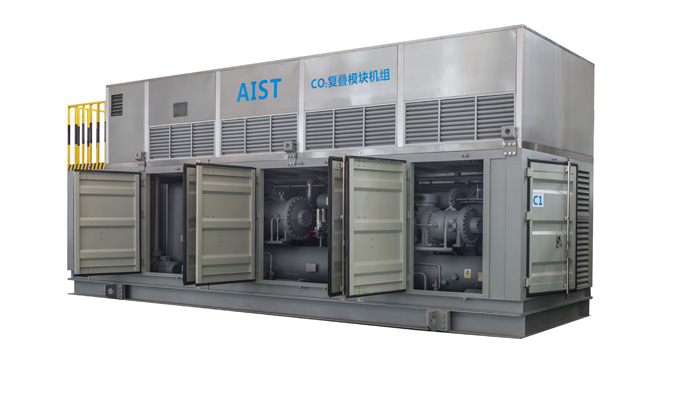
AIST CO2 Module Unit — NH3/CO2 cascade

Skid-mounted with container housing, no refrigeration control room required, and in wide use at home and abroad.

AIST CO2 module unit, NH3/CO2 cascade refrigeration equipment
AIST CO2 Module Unit — published specification
RefrigerantNH3 / CO2 (cascade)
Nominal working condition−38 / +40 °C
Unit cooling capacity271 – 526 kW
CO2 pump flow6 – 10 m³/h
NH3 filling amount110 – 220 kg
CO2 filling amount2,700 – 5,200 kg

Innovative technologies: CO2 screw compressor; no-liquid-storage micro-pressure-drop small-charge condenser; combined rotary gas-liquid separation with micro-gravity liquid level control; automatic intelligent control.

Chemical process variant

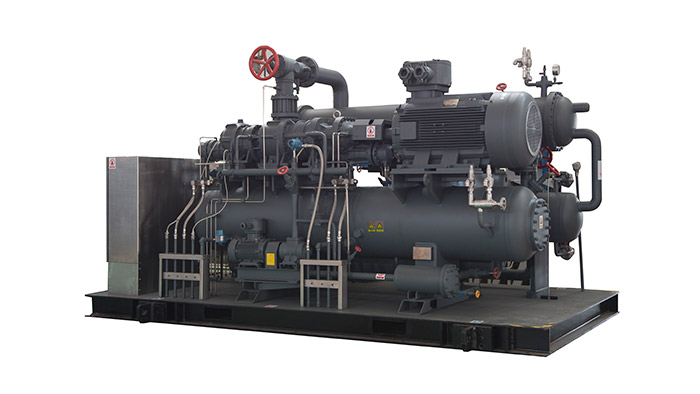
GEPT-R290 — phase change cooling with R290 & CO2

GEPT-R290 CO2 high efficiency phase change refrigerating unit

The GEPT-R290 unit uses R290 and R744 (CO2) as environmentally friendly working fluids. The R290 compressor adopts API 619 standard design with significantly improved sealing and reliability, the whole unit carries an overall explosion-proof design, and a falling-film evaporator delivers efficient heat exchange.

  • Replaces the traditional chiller and cryogenic brine unit in chemical process cooling
  • Fundamentally solves metal corrosion and heat exchange temperature difference caused by brine refrigerant
  • High COP, low circulating pump power, low operating cost
Full Specification
Where CO2 cooling is used

Applications

Food processing

Cryogenic refrigeration at −38 °C nominal evaporating conditions with AIST units in wide use.

Pharma & chemical

Low-temperature process cooling, including dangerous operating areas where safety design is decisive.

Artificial environment

Research and process temperature control applications requiring cascade natural refrigerant systems.

Tell us about your plant. We’ll size the system.

Send your process temperatures, duty and layout — our engineers respond with a matched unit and specification.

Get a Quote